


A cop is facing manslaughter for the first time in 30 years. How did we get here?
For decades, police shootings have sparked protest. But in Boston, the shootings have over the years followed a familiar pattern: Police shoot a Black victim. Black community activists and elected officials clamor for reforms. Demands go unanswered.

In the wee hours of a Sunday morning in September 2002, a Boston police officer opened fire on a fleeing vehicle he said had tried to run down his partner on Dorchester’s Fayston Street near Uphams Corner. One of the bullets struck Evaline Barros-Cepeda, a rear seat passenger in the car, killing her.
The shooting was, in some ways, not remarkable for the time. It was the seventh police shooting within a two-year stretch and the 98th instance of a discharged police service weapon in the city since 1990, according to BPD records.
But the death of Barros-Cepeda, a 20-year-old mother from the neighborhood, marked a turning point. The next day, BPD Commissioner Paul Evans told reporters that he would institute a new department rule barring officers from opening fire on motor vehicles in situations where the vehicle is the only use of force.
The new rule didn’t put an end to police shootings. Since then, Boston Police have shot and killed roughly 20 people, including at least one motorist, according to a list of fatal shootings compiled by Blackstonian, a website run by Jamarhl Crawford, a longtime advocate for police reform and accountability.
But that ’02 BPD policy update may have contributed to what has been the swiftest move against an officer in recent memory. Eight days after the shooting and killing of an unarmed carjacking suspect, Suffolk County District Attorney last week charged officer Nicholas O’Malley with manslaughter — the first time in more than 30 years that an officer has been charged in a shooting while on duty.
“It’s long overdue that we have accountability for the actions of a police officer,” said former District 4 City Councilor Charles Yancey, who repeatedly sought to hold police to account for shootings during his time in office. “Traditionally, there has been no questioning of the actions of police.”
In 1980s Boston, a string of police shootings of unarmed Black men sparked community protest. In 1980, patrolman Richard Bourque killed 14-year-old Levi Hart under questionable circumstances. Although a judge had issued a report that concluded with the statement – “There is ample cause to believe that the death of Levi Hart was the result of an unlawful act or acts on the part of Richard W. Bourque” – an all-white grand jury found no probable cause to indict the officer.
In 1983, 19-year-old Elijah Pate was shot dead after officers said he tried to run them down with a stolen car, despite substantial discrepancies between the police account and those of eyewitnesses to the Fenway shooting who said officers shot the teen in the back as he was running away from them.
Two months into his first term in office in 1984, Mayor Raymond Flynn personally delivered a check for $843,498 to the family of James Bowden, a Boston City Hospital worker whom police mistook for a robber and shot dead in Mission Hill as he attempted to exit his Buick in 1975.
While the city has from time to time settled with families of people who died at the hands of police — $5.1 million for the family of Victoria Snellgrove, $4.7 million to the family of Terrence Coleman, $1 million for the family of Accelyne Williams — prosecution of officers has been rare. O’Malley is the first BPD officer to be charged for an on-duty shooting since 1991.
For decades, police shootings have sparked protest. But in Boston, the shootings have over the years followed a familiar pattern: Police shoot a Black victim. Black community activists and elected officials clamor for reforms. Demands go unanswered.
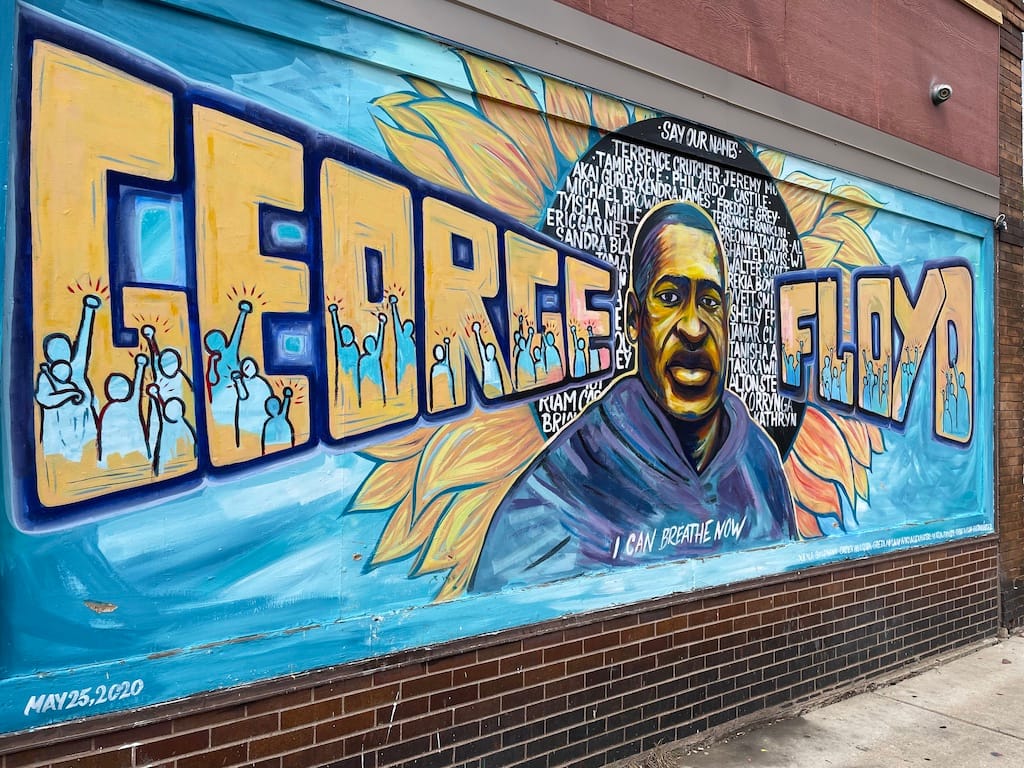
Over the last decade, however, the norms shifted as high-profile police killings of unarmed Black people made national headlines and sparked protests across the country and a national reckoning with the country’s legacy of racism.
In Massachusetts, it was the 2020 Minneapolis police murder of George Floyd that spurred Beacon Hill lawmakers to pass a comprehensive suite of police reforms that included limits on use of force and specific prohibitions against shooting fleeing suspects. Thus, prosecutors are alleging that O’Malley was in violation of departmental procedures and state law.
The charge against O’Malley is by no means an assurance that he will be convicted of voluntary manslaughter. Juries across the country have found officers not guilty, believing they were in fear for their lives, even as they shot unarmed suspects.
But in this case, criminal defense attorney Carl Williams said in an interview, the speed with which the district attorney brought charges is telling.
“Given the response from the Suffolk County District Attorney and Boston Police brass, it would be my guess that the body cam video is quite dramatic,” he said.


