


Are Black Bostonians being erased?
Are Black people being erased from Boston? In her documentary, “Removed: Black erasure in Boston, podcaster Sabrina Salvati asks that question and takes viewers on a fascinating journey through urban renewal, redlining and the changes that Boston has undergone over the last 70 or so years.

Are Black people being erased from Boston? In her documentary, “Removed: Black erasure in Boston, podcaster Sabrina Salvati asks that question and takes viewers on a fascinating journey through urban renewal, redlining and the changes that Boston has undergone over the last 70 or so years.
In the documentary, longtime community residents, including myself, provide windows into historical trends and various dynamics that have shaped the Black community in the city. Their observations and opinions provide insight into the feelings of alienation some in Boston’s Black community experience.
Against the backdrop of the profound changes in the city’s demographics and the socio-economic circumstances of its residents, these feelings of alienation can appear to paint a picture of a concerted effort to displace Blacks from Boston. But a closer look at the city’s history and its current demographic makeup suggests a different story.
Boston’s Black community is growing and has been doing so continuously since the Puritans landed in Massachusetts Bay in 1630. When my great grandparents arrived in Boston in the 1880s — Mary Johnson from Canada, Daniel Miller from Jamaica — the city’s Black community of little more than 5,800 souls resided mainly on Beacon Hill, where my grandfather was born. By the 1920s, the population had shifted mainly to the South End, where my grandfather then lived. When he bought a home in Roxbury in 1939, there were only a handful of Black people in the neighborhood. It wasn’t until the 1960 Census that Blacks edged out whites with 52% of the population there.
The movement of Boston’s Black population through the neighborhoods was largely due to two factors: wealthy whites’ desire to reclaim inner city neighborhoods such as Beacon Hill in the early 1900s and the South End in the 1970s and Blacks’ desire to escape the crowded conditions in those neighborhoods. Moving from the South End to Roxbury in the decades between the ’30s and the ’70s was seen as a significant step up for Black families.
When the city took a wrecking ball to the New York Streets area of the South End in 1954 at the start of its federally funded urban renewal program, it signaled the beginning of a process Black people later called “Negro removal.” The city designated the vibrant, multi-ethnic enclave as a “slum,” tore down blocks of homes and businesses there and made the land available for industrial development. That process was repeated in the West End, where a multi-ethnic, working class neighborhood was replaced with luxury high-rise buildings and the expansion of Mass General Hospital.
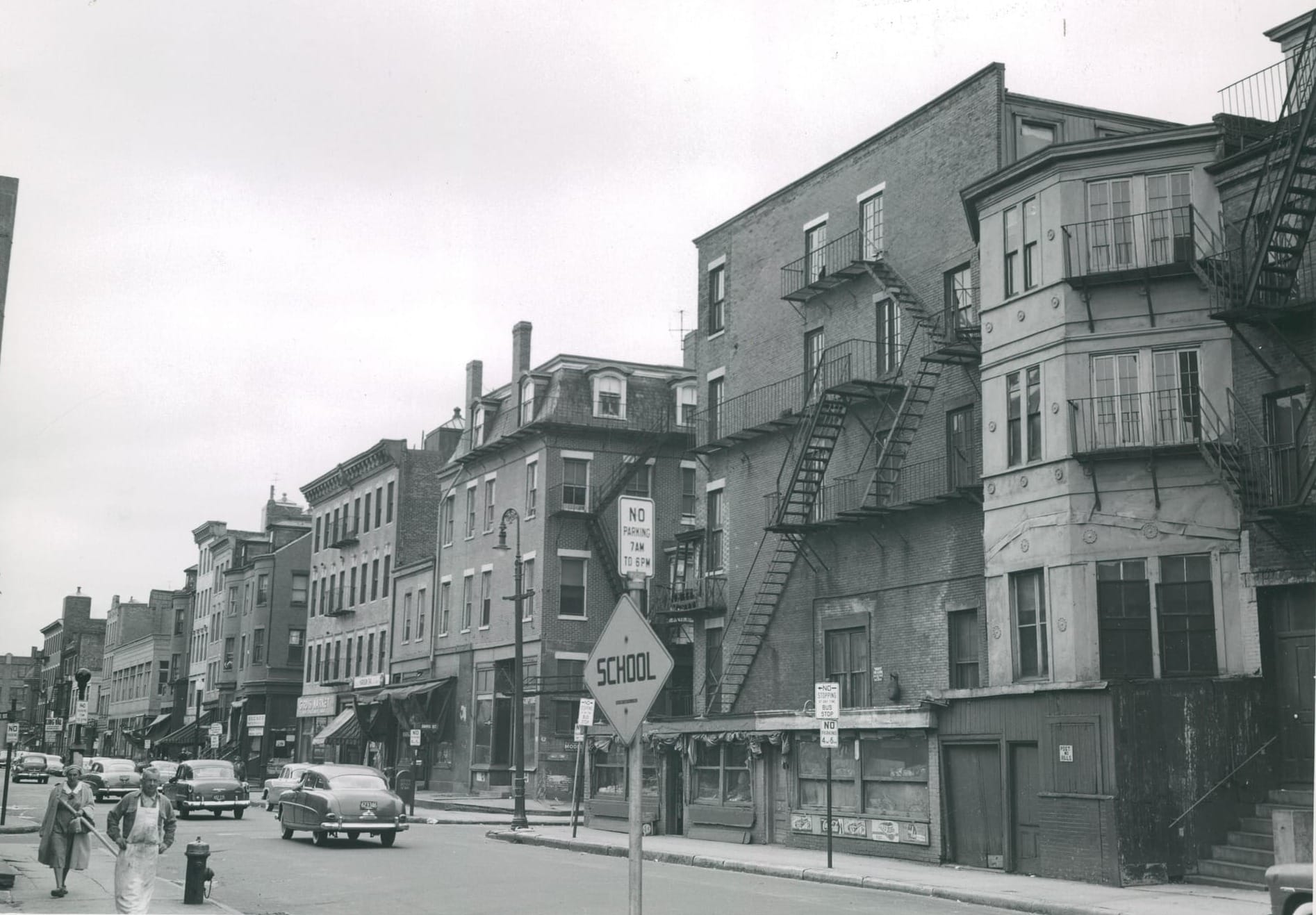
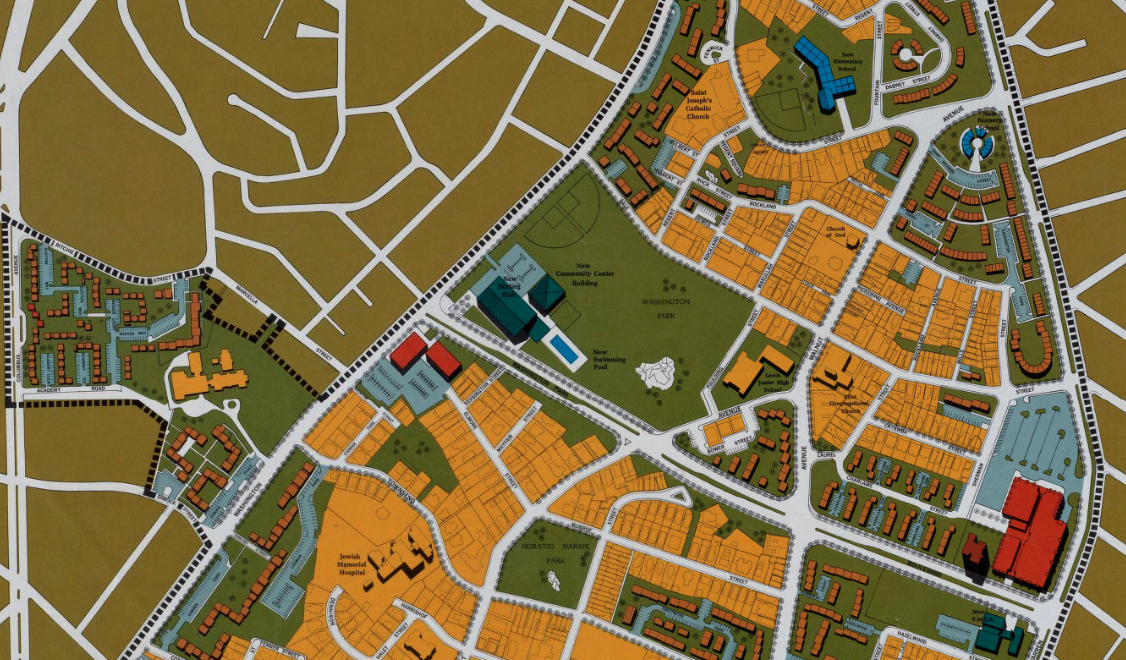
But in subsequent urban renewal episodes, something different happened. In Castle Square, former New York Streets resident Mel King helped organize the Black and Chinese neighborhood residents. They pressed for the demolished homes to be replaced with modern affordable housing. In Castle Square, and later in West Dedham Street and the Madison Park section of Roxbury, King and other organizers pressed for permanently affordable housing. And they won those battles. Affordable developments including Tent City and the Villa Victoria all resulted from tenant organizing.
If the real aim of urban renewal was Negro removal, the program failed miserably. The permanently affordable housing there has meant that working class families, primarily Black, Latino and Asian, have been able to remain in the South End neighborhood as it gentrified.
Similar “slum clearances” in Roxbury resulted in HUD-funded housing developments such as Warren Gardens, Marksdale, St. Josephs, Academy Homes and Charlame Park. As urban renewal was in full swing in Roxbury, the Black population there swelled from just over 25,000 in 1950 to more than 34,000 in 1980. While the neighborhood lost much of its density through urban renewal, Black people have remained to this day the largest share of the neighborhood’s population.
Redlining, when it hit Boston, did not result in the erasure of Black people from Boston, although it did lead to a precipitous drop in the population of Blacks in the South End. In a process described in Larry Harmon and Hillel Levine’s “The Death of an American Jewish Community,” a group of bankers, real estate developers and city planners met in 1968 in response to the Federal Housing Act of 1968, which made it illegal for banks to discriminate in making home mortgages. According to accounts from the time, they drew a red line around a section of the predominantly Jewish sections of Mattapan and Dorchester and decided that they would make loans available for Blacks to buy in that area.
In Salvatti’s documentary, longtime Boston resident Antonia Edwards states that trolley service ended on Blue Hill Avenue was because “they built highways to make it easier for white people to commute to the city,” and says that before, it was a “thriving, flourishing community for American Freedmen [her term for people descended from Blacks who were freed at the time of emancipation in the 1860s].” When trolley service ended on Blue Hill Avenue in 1955, it may have facilitated the travel of whites from the suburbs into the city, but it did so at the expense of whites. Boston’s Jewish community of 90,000 souls was centered along Blue Hill Avenue extending from Grove Hall into Mattapan Square.
Through aggressive block busting tactics, Jews were displaced from Mattapan. In 1970, Mattapan was 78% white. By 1990, it was 80% Black. Boston’s Jewish population has never bounced back to its 1950s numbers.
Urban renewal and redlining did not result in the displacement of Black people from Boston. Boston’s Black population continued on an upward trend to the more than 150,000 people of African ancestry living here now. But as the city’s overall population has grown, the Black share of the population has dipped from a high of 24.4% in 2010 to 22% in 2020. As more Latino and Asian immigrants move into Boston, the city’s share of Black and white residents is declining.
Undeniably, much of the decline in the Black percentage of the city’s population is due to the rising cost of housing. More Black and Latino homebuyers are landing in Brockton than in any other city in Massachusetts, despite the fact that that city’s overall population is smaller than Boston’s Black population. While Blacks aren’t exactly being erased from Boston, Black homeowners are certainly being priced out.
It's worth noting that this great displacement is affecting whites, too. The median household income for whites in 2014 was $68,128, according to data from the Boston Planning and Development Agency. This year, the research firm Nielsberg puts that figure at $128,886. Either white workers received hefty raises over that ten-year period, or working-class white families were displaced by high-earning professionals. I suspect the latter to be the case.
While there may be no evidence of a past or ongoing conspiracy to displace or erase Blacks from Boston, every Black person in the city who owns more than a postage stamp-sized piece of land here regularly receives phone calls, postcards and even visits from real estate investors — cash buyers generously offering to relieve them of their property for 60 cents on the dollar.
In light of this activity, it's understandable that some Black people feel like Black Boston is being erased. Adding to the fears of some in the community, our Black community appears more heterogeneous than ever, with East Africans opening shops and restaurants in Nubian Square and Latino immigrants opening corner stores throughout the Black community.
But Boston’s Black community has always been heterogeneous. Many of our most prominent Black Bostonians including Louis Farrakhan, Mel King, the Guscott Family and the Walcott family — owners of Wally’s Jazz Café — are West Indian. As a port city, Boston attracted West Indian and Cape Verdean seamen and whalers like my Jamaican great grandfather who were eager to trade a life at sea for the safer confines of the city on a hill. People from across the African diaspora have long been embraced by our community and have contributed greatly to the economics, culture and politics of Boston.
Black people haven’t exactly been erased from Boston and nor has our history. Prominent Black Bostonians from Crispus Attucks to Malcolm X are memorialized with plaques and historical markers, public murals, statues and street names. Books like Mel King’s “Chain of Change” and former Banner Publisher Melvin Miller’s “Boston’s Banner Years” are still in circulation and provide fascinating insights into the history of Boston's Black community and the changes that have shaped it. Frugal Bookstore carries both. Anyone curious about our community and its history would do well to pick up copies and read them.


